
Key Points
- Dubai’s model agencies act as talent matchmakers, connecting agents, designers, and photographers.
- Typical agency fees range from 10‑20% of a model’s earnings, plus optional portfolio costs.
- Getting signed usually involves a scouting interview, a test shoot, and a contract review.
- Safety tips: verify registration with the Dubai Department of Economic Development and always read the fine print.
- Choosing between an agency and a modeling school depends on your career stage and budget.
Direct Answer
If you’re wondering what goes on inside a Dubai model agency, think of it as a fast‑paced hub where talent scouts, casting directors, and designers mingle to line up photo shoots, runway shows, and brand campaigns. The process starts with a scouting meet‑up, moves through portfolio creation, and ends with contract negotiations-all under tight deadlines and under the watchful eye of local regulations.
Comprehensive Guide to Behind the Scenes at Model Agency Dubai
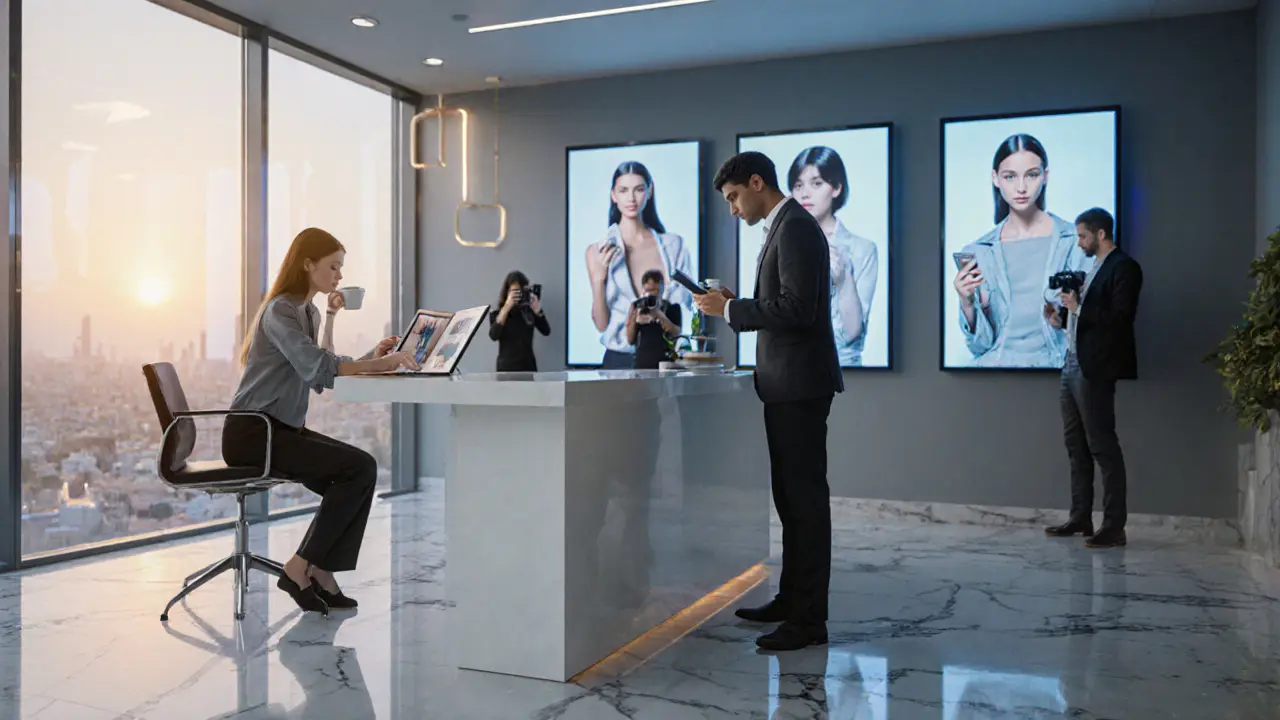
Picture this: you walk into a sleek office on Sheikh Zayed Road, the scent of fresh coffee mixes with the hum of designers scrolling through Instagram. A Model Agency Dubai is a talent‑matching business that discovers, trains, and books models for local and international clients. In the next few minutes, you’ll get a backstage pass to see how scouts spot new faces, how contracts are drafted, and what everyday life looks like for a model in this glittering city.
Definition and Context
A model agency is athing that represents fashion talent, negotiates jobs, and takes a cut of the earnings. In Dubai, agencies operate under theDubai Department of Economic Development’s licensing rules, which means they must register, maintain transparent fee structures, and protect models from exploitation.
Why does it matter? Dubai’s fashion scene has exploded since the launch of Dubai Fashion Week in 2015. International brands now scout the city for its diverse talent pool, and agencies are the gateway that turns a social‑media portfolio into a runway contract.
Benefits of Knowing the Inside
Understanding agency mechanics helps you:
- Spot red flags like upfront “training fees” that never lead to gigs.
- Negotiate better rates once you know the standard 10‑20% commission.
- Plan your schedule around casting calls that typically happen on weekdays between 10am‑3pm.
- Build a stronger portfolio by leveraging agency‑provided photographers and stylists.
One model shared that after learning the agency’s workflow, she was able to turn a casual Instagram shoot into a paid campaign for a luxury hotel within three months.

Types of Model Agencies Available in Dubai
Not every agency works the same way. Here’s a quick rundown:
- High‑fashion agencies - Focus on runway shows and couture editorials, often linked to Dubai Fashion Week.
- Commercial agencies - Bookings for advertising, catalogues, and lifestyle brands.
- Influencer‑model hybrids - Combine social‑media reach with traditional bookings; they charge a lower commission but expect strong online metrics.
- Talent‑scout collectives - Small teams that operate on a commission‑only basis, usually for niche markets like swimwear or fitness.
Depending on your look and career goals, you might start with a commercial agency and later graduate to a high‑fashion house.
How to Find Model Agency Services in Dubai
Finding a reputable agency is easier than you think. Follow these steps:
- Search the Dubai Department of Economic Development’s business registry for agencies with an active license.
- Check Instagram and LinkedIn for recent client work-real‑world campaigns are a good credibility signal.
- Attend networking events like the Dubai International Fashion Expo; many scouts hand out business cards there.
- Ask for referrals from already‑signed models; word‑of‑mouth still rules in this industry.
- Schedule a free “intro meeting” and see if the agency’s vibe matches yours.
Tip: The neighborhoods of AlBarsha and Business Bay house the highest concentration of agencies, thanks to proximity to photo studios and fashion show venues.
What to Expect During a Casting Session
A typical casting runs like this:
- Check‑in: You sign in, receive a brief, and wait in a lounge area with other hopefuls.
- Run‑through: The Casting Director reads the brief-often a mood board featuring colors, poses, and target demographics.
- Quick walk‑through: Models step onto a portable runway or pose in front of a backdrop for 30‑second bursts while the director takes notes.
- Feedback loop: If you make the shortlist, you may be called back for a test shoot with a photographer from the agency’s in‑house roster.
Most agencies keep the whole process under an hour to respect everyone’s time. Bring a water bottle and a simple makeup kit; you’ll likely need a quick touch‑up before the last round.
Pricing and Booking
Here’s a quick breakdown of typical costs:
| Service | Typical Cost | Notes |
|---|---|---|
| Agency commission | 10‑20% of model’s fee | Higher for high‑fashion runway work |
| Portfolio shoot (agency‑arranged) | Free‑to‑low cost (often covered by commission) | Depends on agency’s photographer partnership |
| Training / runway classes | AED500‑2,000 per course | Optional, not required for commercial work |
| Contract drafting | Included in commission | Read fine print; look for exclusivity clauses |
Booking usually starts with an email or agency portal submission. Once a client confirms, the agency sends a contract, you sign digitally, and the job is scheduled.

Safety Tips
- Verify the agency’s license on the Dubai DED website before signing anything.
- Avoid agencies that demand large upfront payments for “training” without a clear refund policy.
- Read every clause-especially exclusivity, termination notice, and travel reimbursement.
- Never share personal banking details until a formal contract is in place.
- Keep copies of all communications; they can be useful if disputes arise.
These steps protect you from the few bad apples that still exist in the market.
Comparison Table: Model Agency vs. Modeling School in Dubai
| Aspect | Model Agency | Modeling School |
|---|---|---|
| Primary Goal | Book paid gigs for existing talent | Teach runway, posing, and industry basics |
| Cost Structure | Commission‑based, no upfront fee (usually) | Course fees ranging AED2,000‑8,000 |
| Result Timeline | Jobs can appear within weeks of signing | First jobs often after 3‑6months of training |
| Industry Connections | Direct links to designers, brands, casting directors | Networking events, but fewer direct bookings |
| Commitment | Often exclusive contracts (6‑12months) | Non‑exclusive, you can pursue agency work simultaneously |
FAQ: Your Questions About Model Agencies in Dubai Answered
Do I need a professional portfolio to join a Dubai agency?
A strong portfolio helps, but many agencies offer a complimentary test shoot once you pass the initial scouting interview. Bring a few high‑resolution shots that showcase different looks.
How long does a typical contract last?
Contracts usually run for 6‑12months and may include exclusivity clauses that prevent you from signing with another agency during that period.
Can I work freelance while signed?
It depends on the contract. Some agencies allow non‑conflicting freelance work, while others require you to go through them for every gig.
What should I wear to a casting?
Neutral basics work best: fitted jeans, a plain t‑shirt, minimal jewelry, and clean shoes. The focus should be on your look, not your outfit.
Are there age limits for signing?
Most agencies accept models from 16years old onward. Child modeling is handled by specialized talent agencies that require parental consent.
Ready to Step Inside?
If you’ve absorbed the basics, the next move is simple: choose a reputable agency from the list above, book a free intro session, and let the Dubai runway become part of your story.



6 Comments
They’re hiding the real contracts behind a veil of bureaucracy.
The modeling ecosystem in Dubai operates like a hyper‑accelerated micro‑economy, where talent is the volatile commodity.
Every agency functions as a node in a networked market, translating aesthetic capital into fiscal exchange.
When a scout spots a face, the ensuing cascade resembles a chain reaction in a particle collider.
The initial interview is less a conversation and more a data‑capture protocol, extracting biometric markers and social metrics.
Afterwards, the test shoot acts as a proof‑of‑concept, a pilot study that validates market viability.
Contracts are the legal scaffolding that anchor these transactions, yet they often embed hidden variables that only reveal themselves under stress testing.
The 10‑20 % commission is a baseline, but the true cost includes opportunity cost, brand alignment depreciation, and the intangible loss of creative autonomy.
Regulatory oversight by the DED provides a veneer of legitimacy, but the enforcement bandwidth is limited, creating pockets of gray‑area practices.
Models who fail to scrutinize exclusivity clauses may unknowingly bind themselves to a single node, restricting their ability to diversify revenue streams.
Conversely, a well‑negotiated non‑exclusive clause can act as a hedge against market volatility.
The safety advice about verifying licenses is essentially a risk‑mitigation strategy akin to due‑diligence in venture capital.
Portfolios, when subsidized by agencies, serve as both marketing collateral and an implicit equity stake for the agency.
The dichotomy between high‑fashion and commercial agencies reflects a segmentation of consumer demand curves, each with its own elasticity.
Influencer‑model hybrids blur the lines further, injecting algorithmic reach into the traditional supply chain.
Ultimately, the model’s agency relationship is a contract of trust, conditional on mutual transparency and aligned incentives.
Navigating this labyrinth requires not just beauty, but a strategic mindset comparable to a chess grandmaster plotting several moves ahead.
Great rundown! 🙌 The safety tips about checking the DED license really saved me from a sketchy agency.
I also love the clear breakdown of commission rates – 10‑20 % is what most of us expect.
Remember to bring a water bottle and simple makeup kit to casting; it makes those quick touch‑ups a breeze.
Good luck to everyone chasing the runway in Dubai! 🌟
Totally agree, the water bottle tip is underrated.
Having a minimalist outfit lets your features shine, and you avoid looking like you’re trying too hard.
Plus, a calm mindset helps you ace that 30‑second walk‑through.
From a mentor’s perspective, the article captures the essence of the agency‑model symbiosis with commendable depth.
The analogy of contracts as legal scaffolding resonates with the structural integrity needed in any professional relationship.
Emphasizing due‑diligence, akin to venture capital risk assessment, underscores the strategic foresight models must adopt.
Furthermore, the distinction between high‑fashion and commercial segments aligns with market segmentation theory, offering a clear framework for aspirants.
In practice, nurturing an inclusive network while remaining vigilant of exclusivity clauses can foster sustainable career trajectories.
Overall, the guide serves as both a pragmatic checklist and a philosophical compass for emerging talent.
Don’t overthink it – just show up, look sharp, and let the agency do the rest.
If they try to milk you for extra fees, call them out and walk away.